

Most organisations have a crisis communications plan that sits in a folder.
It covers scenarios, assigns roles, details responses. Then something real happens and they discover it was written for a different crisis entirely.
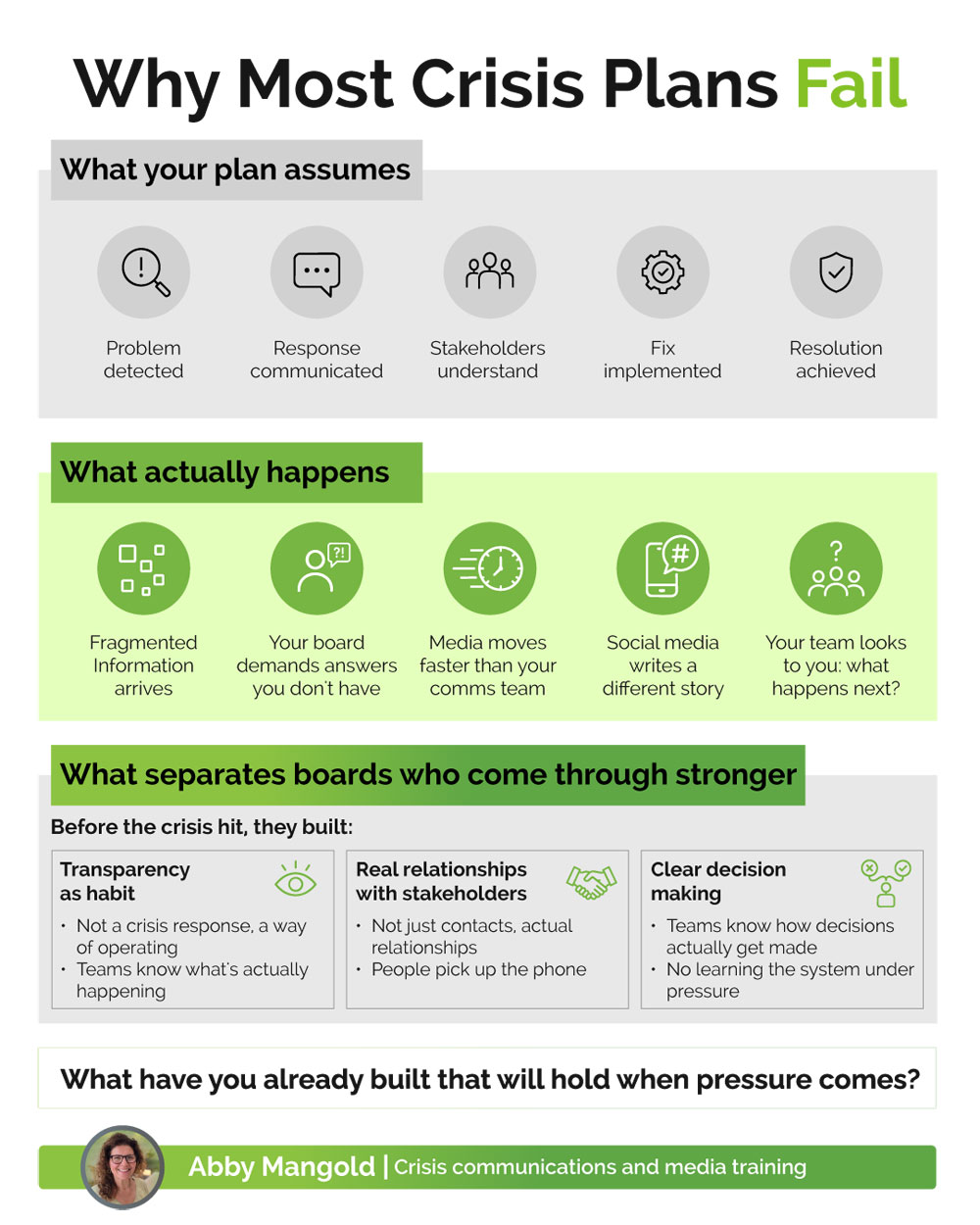
Here’s what I’ve observed: the boards who handle crises better don’t have better plans. They have built something long before the crisis arrives.
Transparency as an actual habit, not a response mechanism. Real relationships with stakeholders, not just contact lists. Clear decision-making processes their teams understand, because they’ve watched them operate in normal times.
When pressure comes, those teams don’t waste energy wondering if leadership believes what they’re saying. They don’t have to learn the system under crisis conditions. They move because the infrastructure is already there.
The boards that struggled had built all the tactical components. They had the right roles assigned, the right channels identified. What they hadn’t built was trust.
When the crisis hit, their teams didn’t know if leadership meant what they were saying. That uncertainty travelled faster than any communication could fix.
Preparation is the person, not the document. What have you actually built before the crisis that will hold when pressure comes?
If you want to ensure your organisation relies on real operational readiness rather than just a document on a shelf, discover how our crisis planning and preparation services can support your leadership team.