
Why crisis response today is about judgement over information

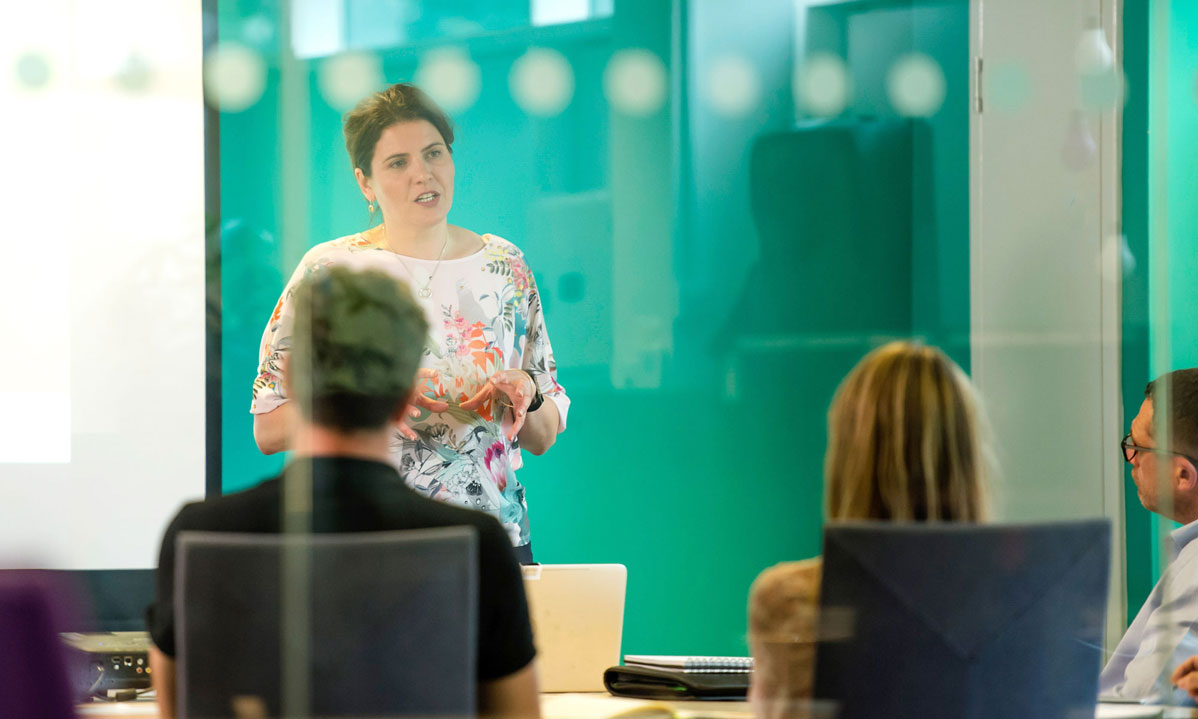
Abby Mangold presenting to a small team

One of the most dangerous assumptions I see in crisis response today is this:

That the truth will speak for itself (in the age of AI and fabricated content).

It will not.

I have learned that in moments of uncertainty, people do not wait for facts.

They look for signals.

  • Who speaks first.
  • Who sounds credible.
  • Who appears composed.
  • Who seems to care.

This is why crisis response today is less about information and more about judgement.

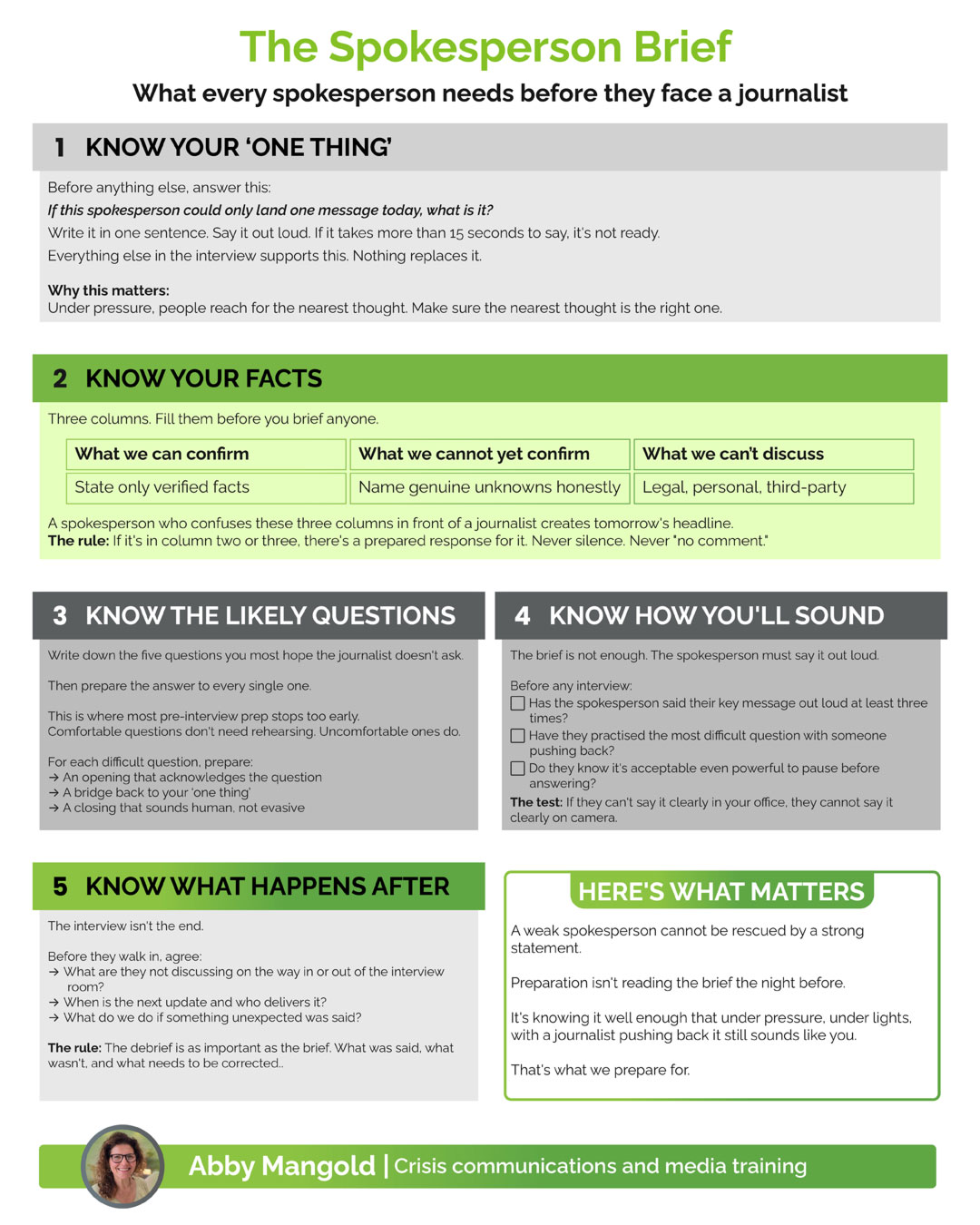
When deepfakes, edited clips and misinformation are circulating, the organisations that hold trust are the ones that already have three things in place.

First, decision discipline.

Someone who knows when to speak and when not to.

Not everything needs an immediate response, but everything needs a considered one.

Second, language that sounds human under pressure.

Audiences can sense scripted reassurance instantly.

In high-risk moments, tone matters as much as facts.

Third, leaders who have rehearsed uncertainty.

Not just the scenario, but the discomfort of not having all the answers.

What I have seen repeatedly is this:

Organisations do not fail because they lack technology, they fail because they have not prepared their people to lead when certainty disappears.

AI makes crises faster and noisier.

If you are relying on tools alone to protect trust, you are already exposed.

To ensure your team is ready for the digital challenges of today, explore our Social Media Crisis Management services.

Social Media & Mental Health

Social Media & Mental Health

Why social media companies should (but probably won’t) act responsibly and lead the conversation on mental health

Social media companies are some of the most powerful and influential business entities on the planet. Their decisions shape how the world communicates and how we as individuals consume information. Unlike most large-scale global commercial industries, social media is self-regulating. This puts social media companies in a unique position of global responsibility.

A new report published by the Royal College of Psychiatrists last week said social media companies should be forced by governments to hand over their data for independent research into the risks of social media use.

Continue reading “Social Media & Mental Health”