

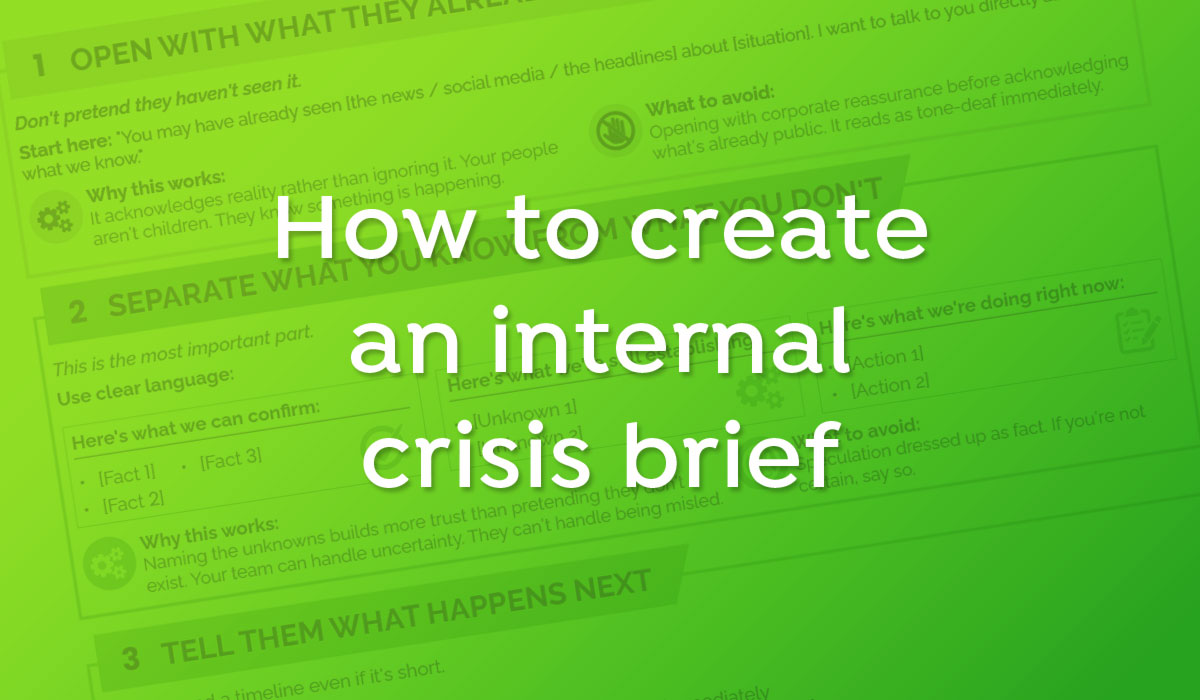
How to create an internal crisis brief when you don’t have all the answers

Create an internal crisis brief

After my last post, a couple of people asked: “Right, but what does an internal crisis brief actually look like when we don’t have all the answers yet?”

Fair question.

Because the instinct is to wait until everything is confirmed, signed off, and legally approved.

But by that time, your people have already formed their own version of what’s happening.

And it’s almost always worse than the reality.

I’ve used this structure with clients for years. It’s not complicated. It’s not perfect.

But it works when you need to brief your team quickly and honestly, even when you’re still piecing things together yourself.

Save this. You’ll need it the next time something breaks before you’re ready.
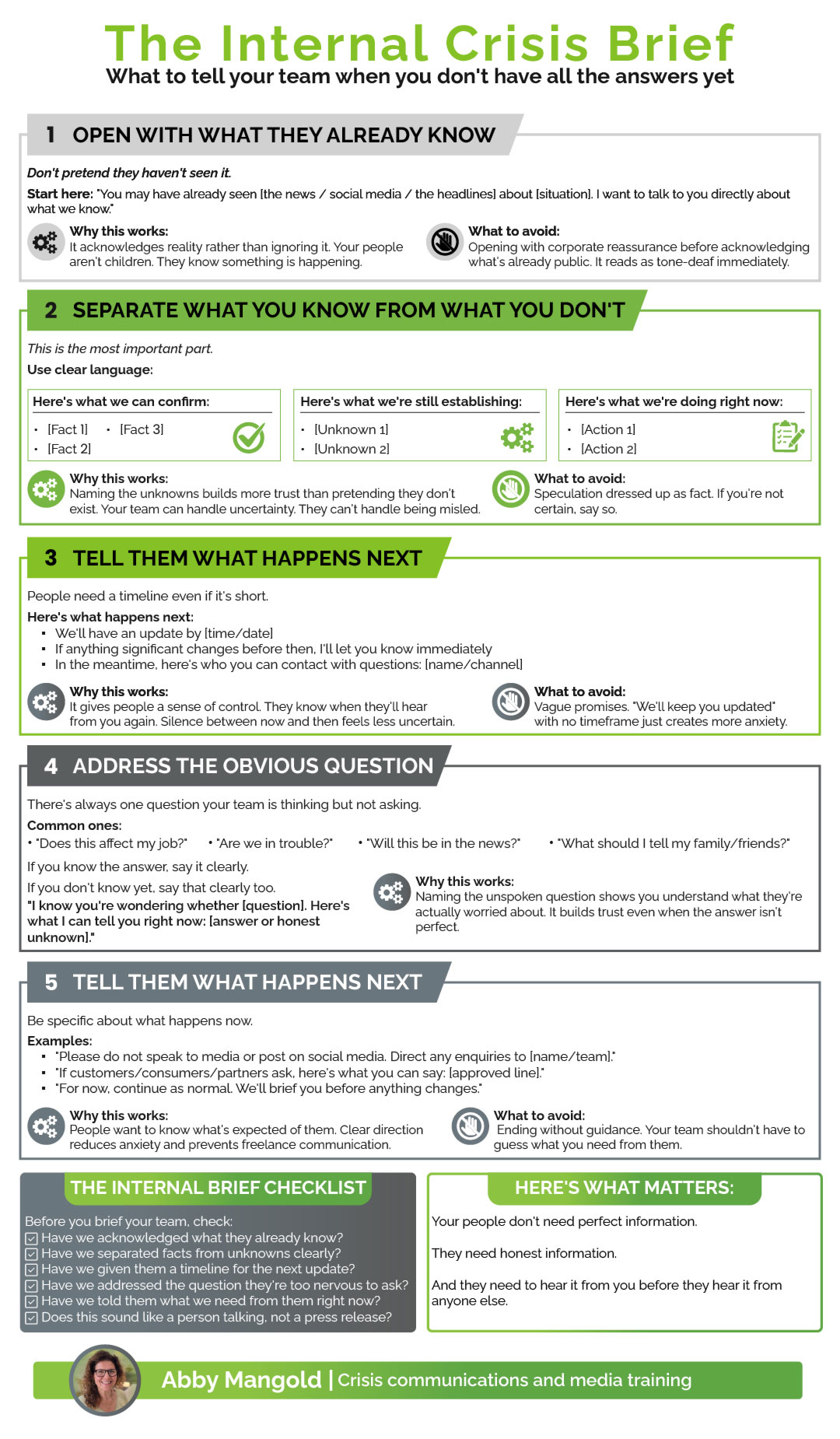
The Internal Crisis Brief

Keeping your team informed during a period of uncertainty is the best way to protect your company culture. For expert support in developing your internal and external response plans, take a look at our crisis planning and preparation services.


Why your external statement shouldn’t be the first thing your staff see

Abby Mangold of Mangold Consultancy

Your employees found out about the crisis from X rather than from your own external statement.

And now you’re wondering why the internal mood feels… off

This happens more than organisations want to admit.

A crisis breaks. The comms team scrambles. Legal gets involved. The CEO needs to sign off. Hours pass.

And whilst everyone is perfecting the external statement, the people inside your building are already talking.

They’re in WhatsApp groups. They’re messaging each other. They’re refreshing the news.

And they’re wondering why nobody has told them anything.

I learned this the hard way many years ago.

A client issued a brilliant external statement. Thoughtful. Measured. Exactly right.

But their own team found out at the same time as everyone else.

The statement was fine. The damage was already done.

Because when your people hear it from the outside first, they stop feeling like insiders and in a crisis, they should be your ambassadors.

And that feeling doesn’t go away quickly.

Here’s the bit nobody wants to hear: your employees are your first audience.

Not your last.

Brief them first. Even if the brief is “here’s what we know, here’s what we don’t know yet, here’s when you’ll hear from us next.”

That’s still infinitely better than silence.

Because the external statement might protect your reputation.

But how you treat your people in the first hour is what protects your culture.

Protecting your culture is just as important as protecting your brand during a crisis. If you need help developing a robust communication plan for both internal and external audiences, please explore our crisis planning services.

Reputation management – where any business (big or small) should start from

Reputation Management Mangold Consultancy

Regardless of its size or influence, every business needs to establish and maintain a good reputation for the sake of its customers, employees and future existence. But if global superbrand Facebook struggles to manage it, what hope is there for smaller companies who don’t have millions to spend on corporate communications support and media training? Follow this starter guide to reputation management and a million pound budget won’t be necessary.
Continue reading “Reputation management – where any business (big or small) should start from”