Someone asked me recently: “How do I know if we actually need media training?”
Fair question.
Because most organisations don’t think about media training until they need it urgently. Which is usually too late to prepare properly.
So here’s my answer.
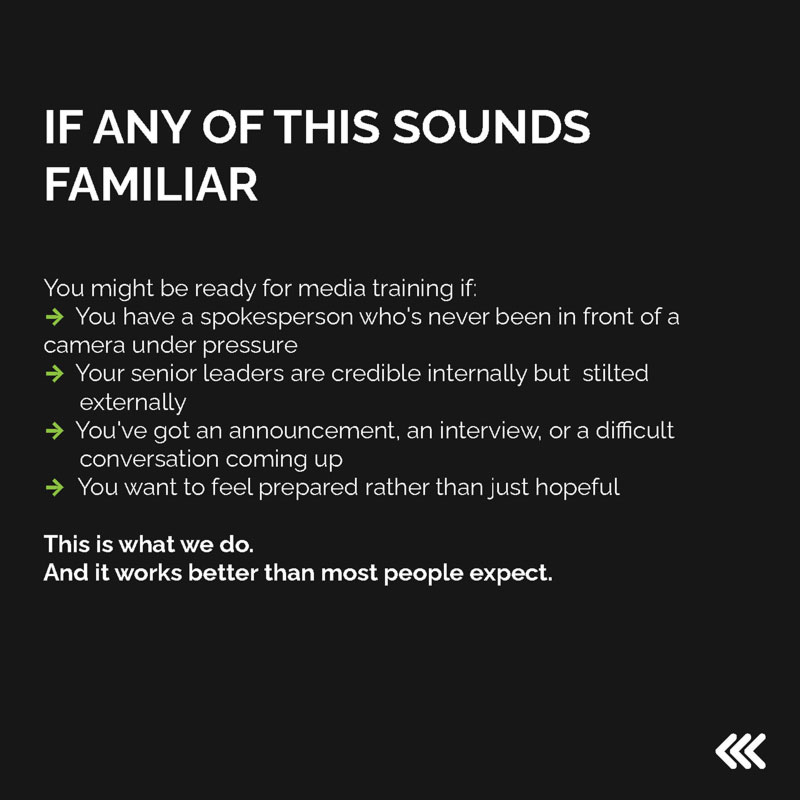
You probably need media training if any of these sound familiar:
- Your CEO is brilliant in the boardroom but has never been on camera.
- You’ve got a big announcement coming up and nobody has rehearsed how to talk about it under pressure.
- Your senior team keeps saying “we should probably do some training” but it never quite happens.
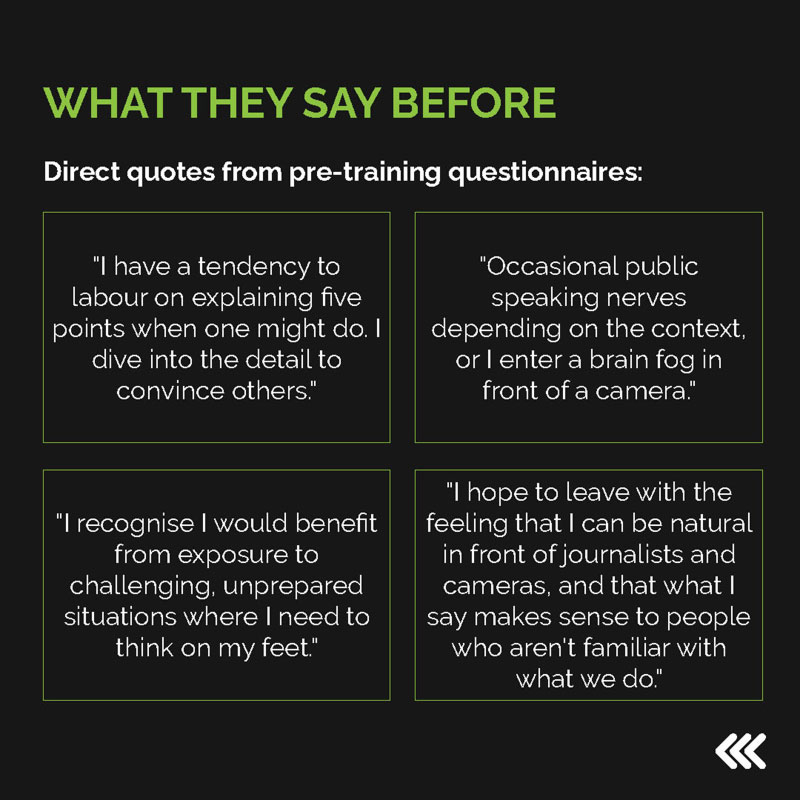
- You’ve got spokespeople who are technically expert but go blank the moment a microphone appears.
- Someone is about to do their first major interview and you’re crossing your fingers rather than feeling confident.
- You’re preparing for something difficult – a restructure, an incident, a sensitive topic and you know the questions are going to be uncomfortable.
If any of these sound familiar, you’re already later than you should be.
Not catastrophically late. Just late enough that it’s worth sorting now rather than waiting until it becomes urgent.
Because the difference between a spokesperson who has practised under pressure and one who hasn’t is immediately obvious.
To them. To you. To everyone watching.
The work isn’t complicated.
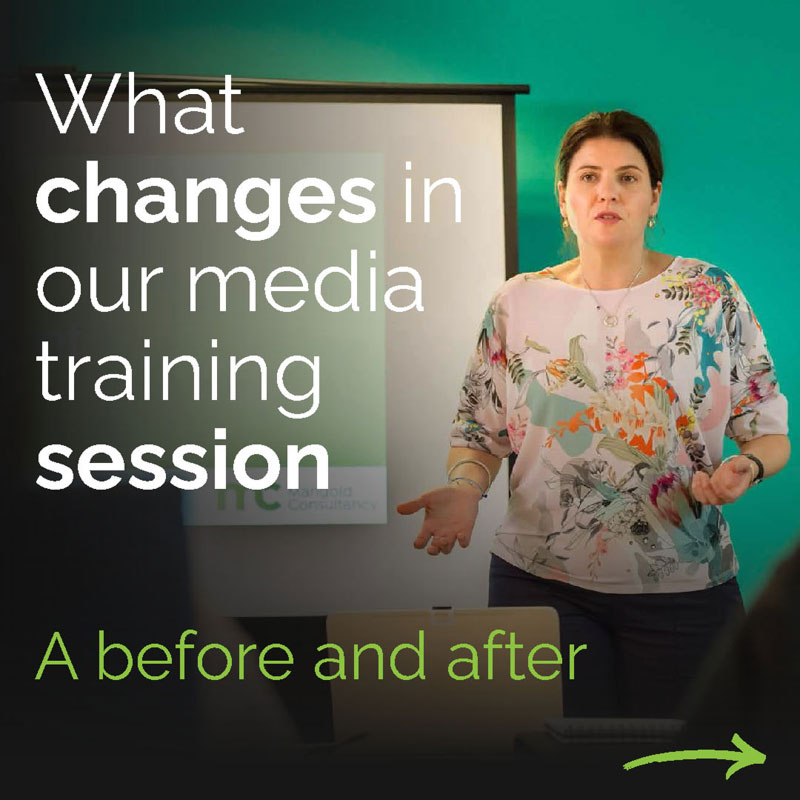
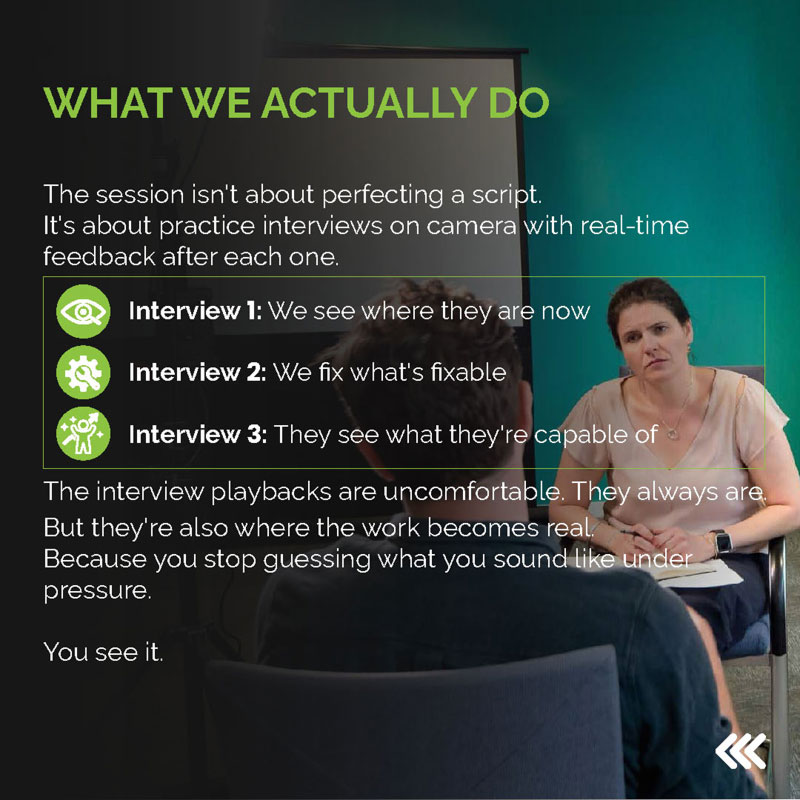
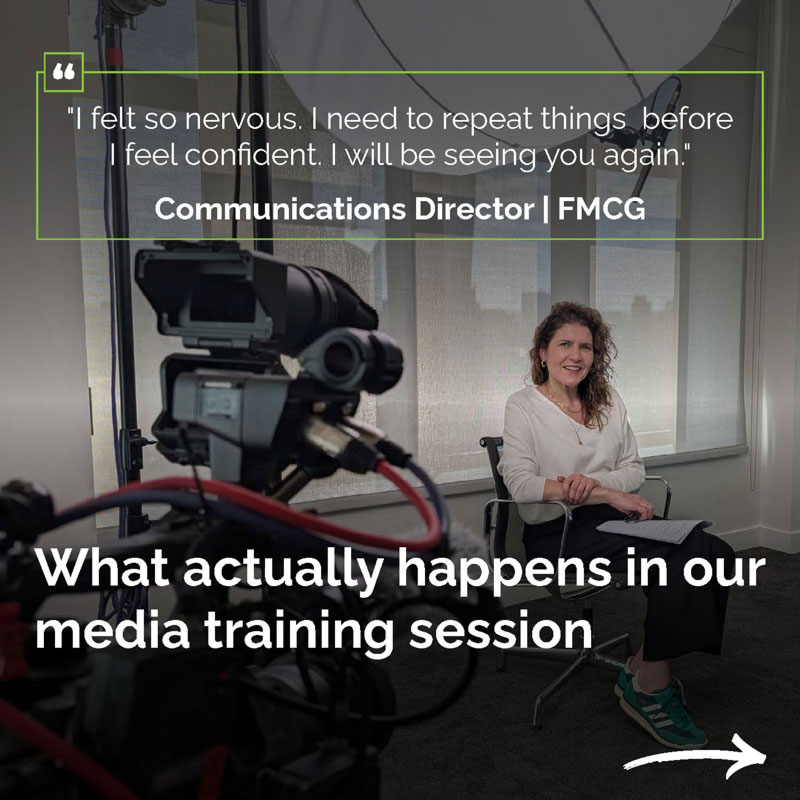
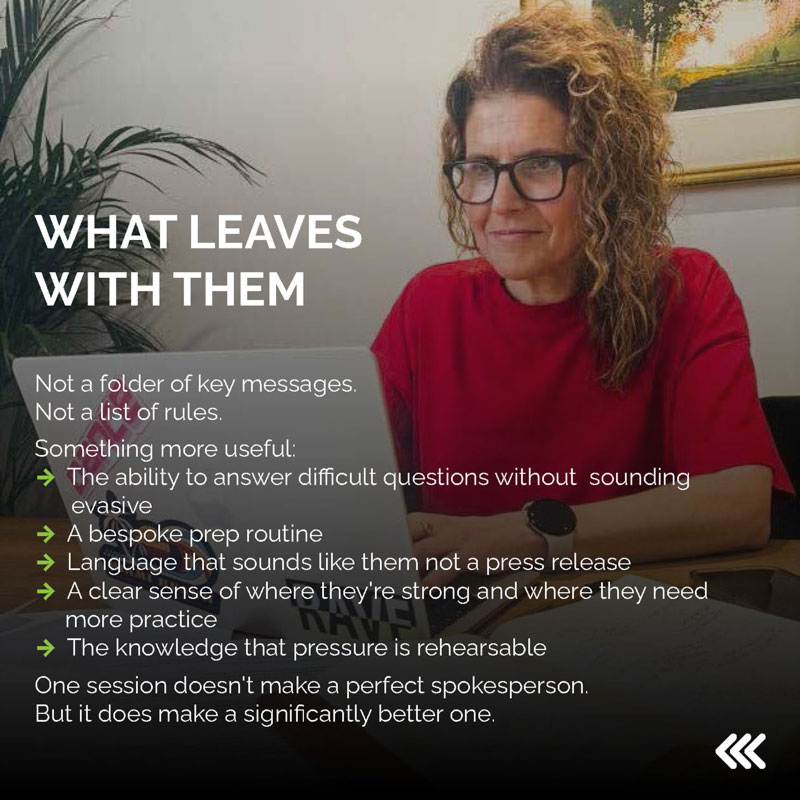
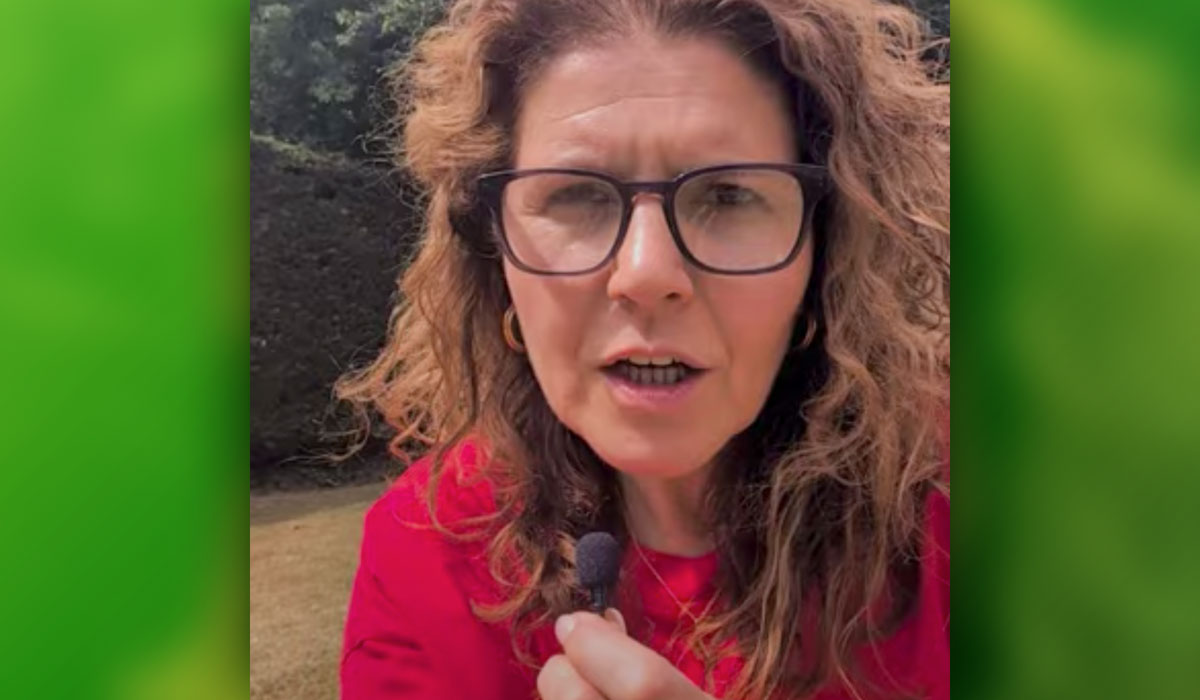
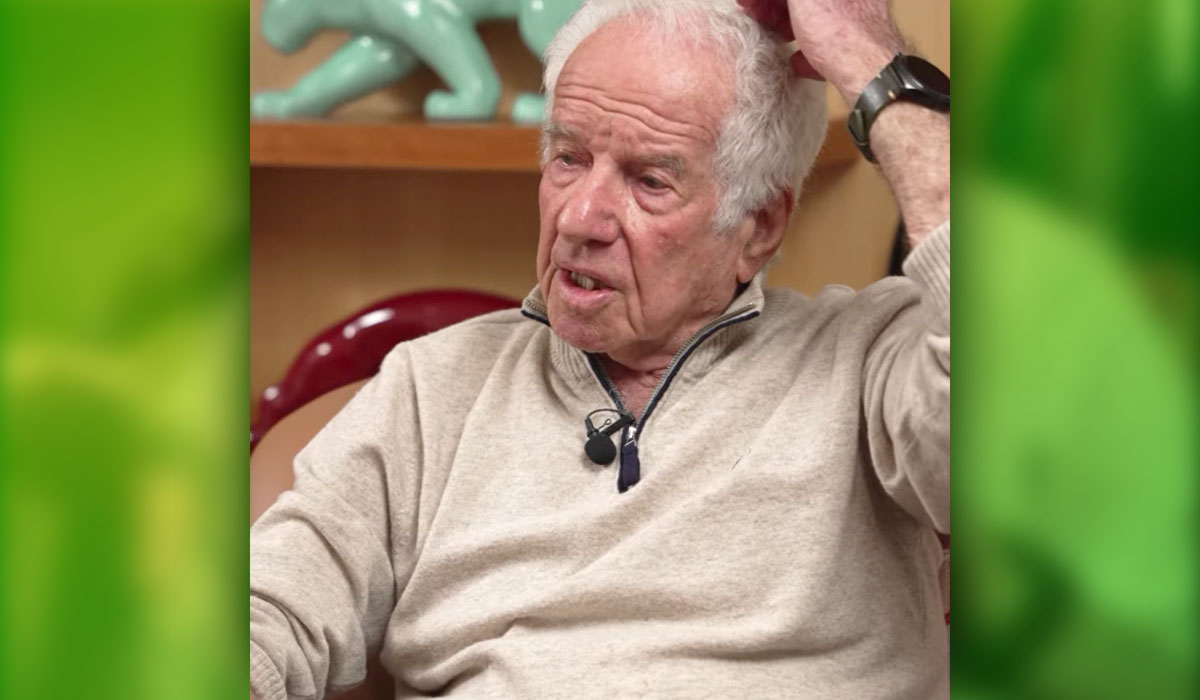
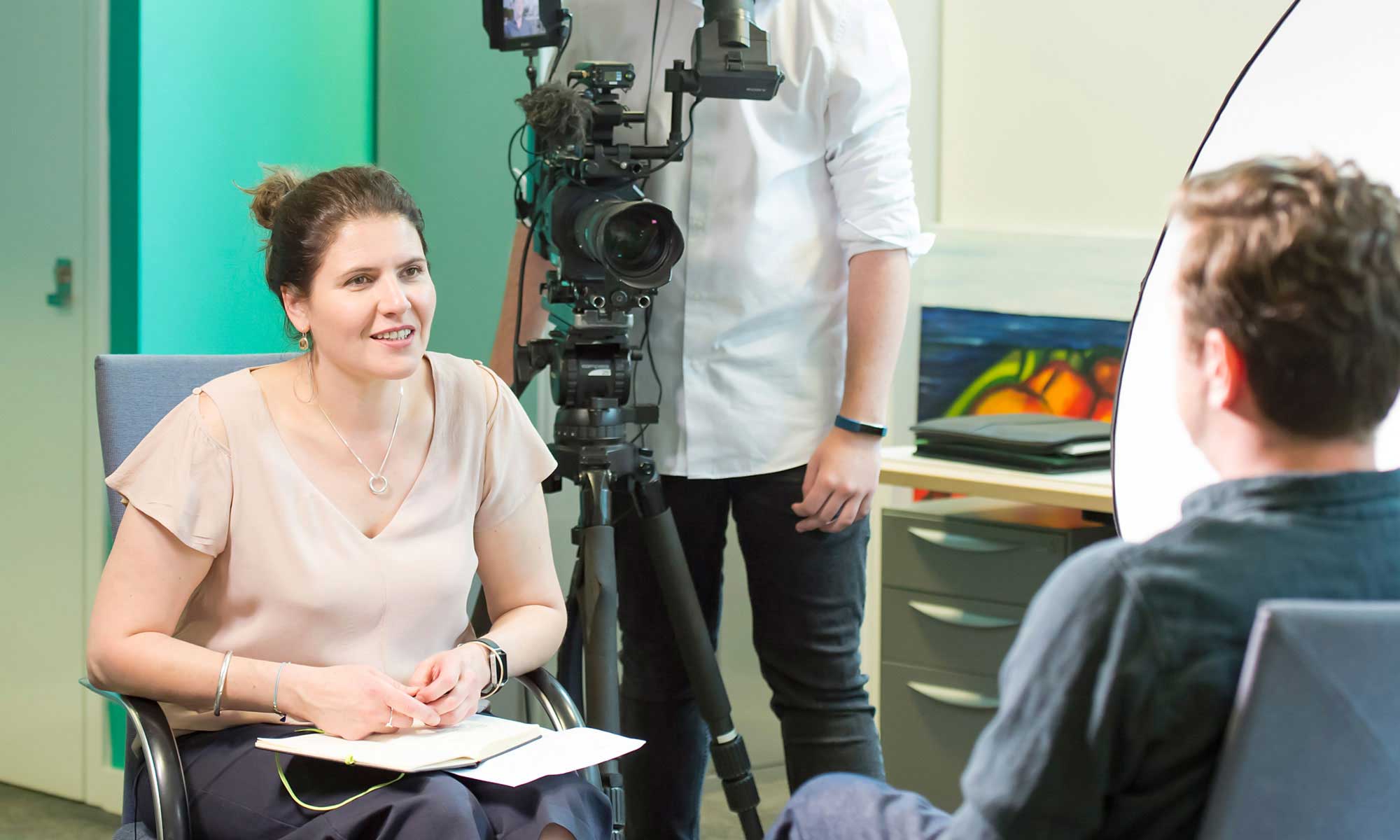
We put people in front of a camera. We ask them difficult questions. We watch it back together. We fix what’s fixable.
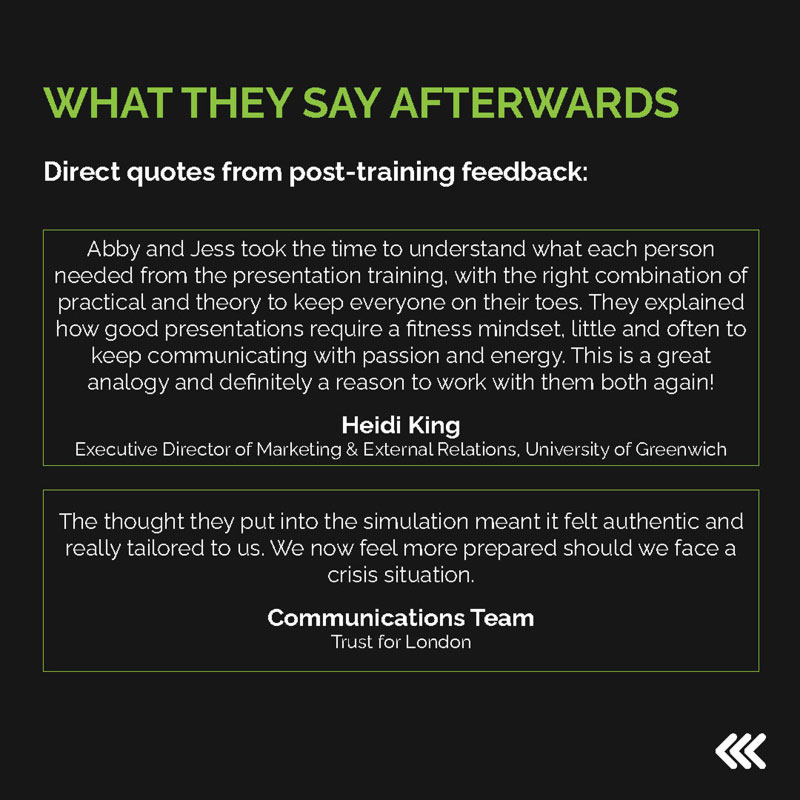
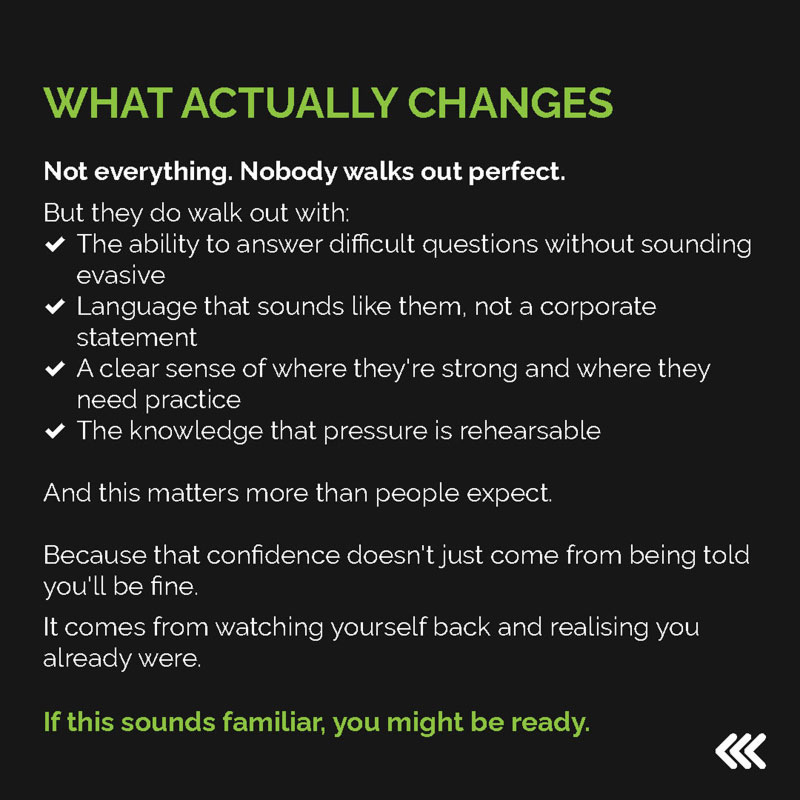
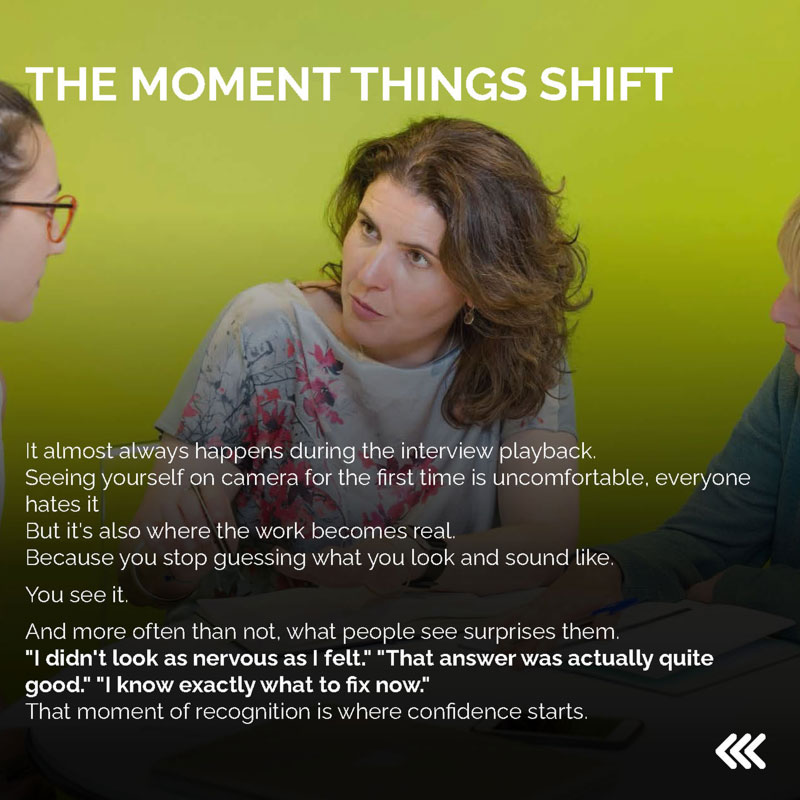
By the end of the day, they’ve seen themselves do it. And that’s what builds confidence – not being told they’ll be fine, but watching themselves actually do it.
If you’re in that position where you know someone needs to be ready and you’re not entirely sure they are, that’s what we do.
Worth sorting before it becomes urgent.
The best time to prepare for a media interview is before the request arrives. If you want to ensure your leaders are confident and ready for the camera, find out more about our media training and presentation skills.