
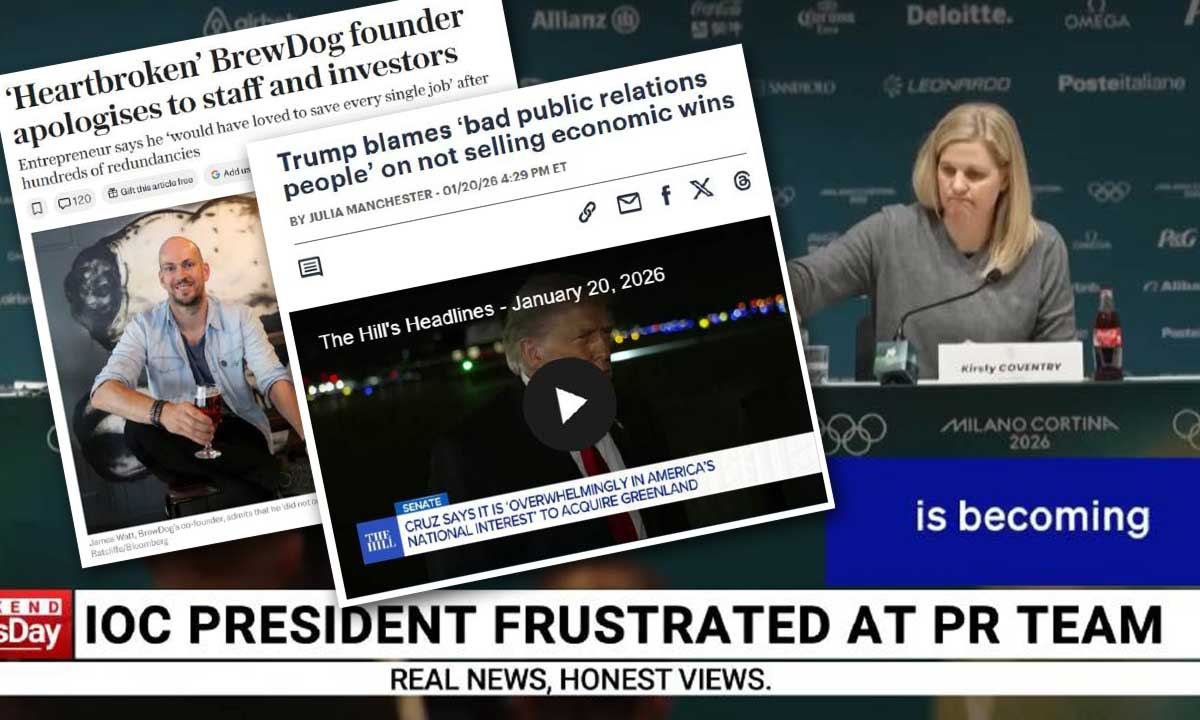
Blaming the PR team has become a bit of a trend. And it’s getting predictable.
You know things aren’t going well when the PR advisors are in the news.
- BrewDog’s founder: “My responses always came from PR advisers.”
- Trump: “Maybe you have bad public relations people.”
- IOC President at a closing press conference: “I’m really looking at my team and maybe someone needs to be dismissed.”
The pattern is always the same. Something doesn’t land. The public aren’t buying it. And suddenly it’s the Comms team’s fault for not “messaging it better.”
Never mind that we said it wouldn’t work. Never mind that we flagged exactly what would happen. Never mind that some things genuinely cannot be spun.
It’s just easier to blame the people who had to explain it than admit the thing itself was the problem.
But here’s what nobody says out loud: good PR advisors tell you what you need to hear, not what you want to hear. And sometimes what you need to hear is “this is going to be difficult.”
When that advice gets ignored and it does, in fact, turn into a disaster, well, apparently that’s still the PR’s fault.
The PR team didn’t create the crisis. We just got stuck explaining it. And sometimes you can’t comms your way out of a crisis.
Next time you see a leader pointing at their communications team, just remember: you know things really aren’t going well when the people behind the scenes become the story.
If you want communications advice that’s built to stand up under real pressure, not just sound good in the room, get in touch to find out how we work with leadership teams before, during and after a crisis.