


Taking my own medicine: The Navigating Crisis Comms panel

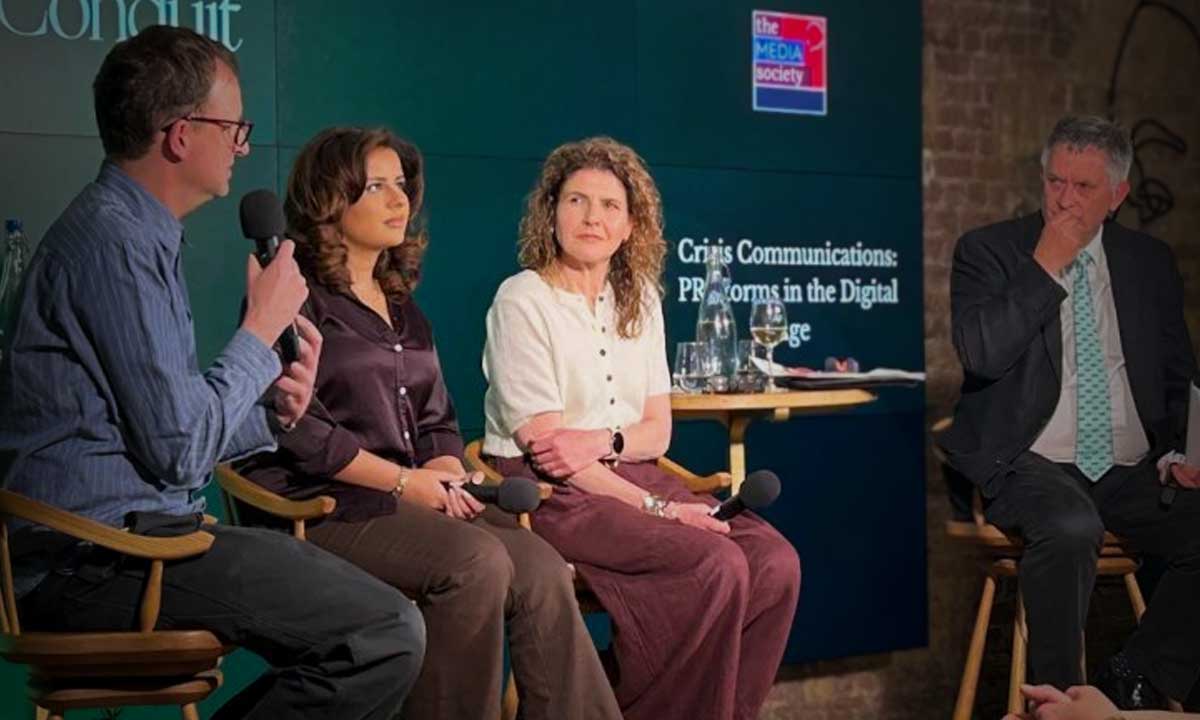
Abby Mangold at The Media Society's Navigating Crisis Comms panel at The Conduit

Taking my own medicine…

In April I took part in The Media Society’s Navigating Crisis Comms panel. It was pleasure to sit alongside Anoushka Mutanda Dougherty, Scott Langham and Simon McCoy who was chairing.

We took a deep dive into crisis, media & social media with some interesting and pertinent anecdotes from the whole panel.

Like many of the people we train, I also get nerves in the run-up to speaking. But I’m happy to report that lots of preparation (including being grilled by my teenage kids the night before) and some focused breathwork meant I thoroughly enjoyed the whole event.

Thanks also to Nigel Dacre, Sue Ellis, Alex Sinker, and Asha de Lanerolle at The Conduit for looking after all of us.


If you’d like to hear more about how we help people prepare for high-pressure conversations, whether that’s a panel, a press interview or a crisis, get in touch or find out more about our media training.

Join the discussion on LinkedIn »
 

Why crisis communications orthodoxy no longer works

Abby Mangold at the Media Scoiety

I wrote an article for The Media Society on why crisis communications orthodoxy is no longer working.

The old rulebook assumes crises happen one at a time. That you’ll have time to establish facts, gather your team, and carefully plan your response. That internal comms will reach employees before they see it on X.

None of that is true anymore.

I’ve watched this pattern in dozens of simulations: organisations handle the first crisis competently. Then we introduce a second issue twenty minutes later: a regulatory inquiry whilst managing employee grievances, social media escalation coinciding with media pressure. The collapse happens predictably.

The problem isn’t the plan. It’s that we’ve prepped for an environment that no longer exists.

Crisis communications now happens in a permacrisis era where disparate crises interact, where misinformation spreads six times faster than truth, where one social media post can catapult you into immediate crisis mode.

Documents can’t think. They can’t adapt to unanticipated conditions. It’s people who manage a crisis, and they need to be ready.

What needs to change:

  • Practice with your people regularly
  • Use tech as your 24/7 team member for monitoring
  • Simplify – decision-making committees are the enemy in a crisis
  • Prepare spokespeople for difficult questions, not the ones they’d like to be asked
  • Own your social media spaces before the crisis hits

The full article is on The Media Society Substack.

If your crisis plan still assumes one issue at a time, it may be worth pressure testing it against something closer to reality. Get in touch to talk about crisis planning and preparation, or find out more about running a simulation with your team.


Join the discussion on LinkedIn »