The first hour crisis blueprint

first hour crisis blueprint

When the unexpected hits, the first 60 minutes decide everything.

In those moments, instinct kicks in but instinct without a plan can quickly unravel.

That’s why I run “first hour” drills with leadership teams.

We walk through what to do minute by minute: fact-checking, activating the right people, monitoring, and getting clear messages out fast.

It’s not theory. It’s practice.

Because in a real crisis, you don’t rise to the occasion you fall back on your training.

👉 Curious what that looks like? This is the blueprint I use to help leaders prepare.

The first hour crisis blueprint

What to do when the clock starts…

  • 0–10 mins Check facts from source. No speculation
  • 10–20 mins Initiate Crisis Management team, brief Crisis Comms agency and switch on social media monitoring.
  • 20–30 mins Agree and issue holding statement.
  • 30–45 mins Draft follow up internal and external comms (concise, clear, calm).
  • 45–60 mins Issue updated comms.

Act Now Debrief later

Why AI reputational risks need cultural readiness

AI reputational risks

The biggest AI reputational risks I’m seeing inside organisations right now:

  • Deepfakes (external threat)
  • Biased or offensive AI outputs (internal threat)
  • Confidential data leaks via unsecured AI use (internal threat)
  • Misinformation amplified by AI (external threat)

I’ve advised leadership teams through all four in the last 12 months.

The fix isn’t just technical – it’s cultural and procedural.

Every team, from comms to legal to IT, needs to know their role before it happens.

Why crisis retainer support changes the outcome

Why crisis retainer support changes the outcome

In the last 12 months, I’ve handled multiple crises

Some were national news.

Some were small but had the potential to get messy fast.

Every single one started with a phone call that began with an element of panic.

The longer it took for that call to come, the harder the recovery was.

With crisis retainer support, it is different.

We already know your business, your risks, and your people.
We can move in minutes instead of days.

In crisis work, speed is not a luxury. It is the difference between headlines that fade and headlines that haunt.

If you want to know how ready your business really is, let’s talk.

Why reputation in crisis communications matters

Reputation in crisis communications - you don't need to go viral

You don’t need to go viral

You need to stay credible.

The next headline won’t care how many views your last post got.

What matters is

  • Can you be trusted?
  • Are you consistent?
  • Will people believe you when it counts?

A tech founder I worked with had all the right metrics online. But when their product failed and the media called they froze.

The polish cracked. The trust dropped.

In crisis comms, reach is nice. But reputation is everything.

Build that. And everything else follows.

Why crisis leadership is not always about the job title

In a crisis, leadership is not always about the job title

After following my son onto a roller coaster, I realised something about crisis leadership.

I have led crisis teams through events watched by millions.

I have guided CEOs through live interviews knowing the wrong phrase could cost them everything.

But on a rollercoaster in Florida, my youngest son was the leader.

I just followed.

It reminded me that in a crisis, leadership is not always about the job title.

It is about the person with the calm, clear head when everything feels like it is going off the rails.

I have been that person in the middle of breaking news and corporate storms.

It is why organisations keep me close before they need me.

If you do not have someone like that in your corner, you are leaving it to chance.

And chance is not a strategy.

Crisis comms sisters: Our superpowers at work

Abby and Jess Mangold - Crisis Comms Sisters

2 sisters working together?

Crisis superpowers, journalistic expertise, snacks 🥜

This is how Jess Mangold and I make it work…

Jess on Abby “She puts people at ease within seconds, finding common ground and camaraderie, even in high-pressure crisis situations”

“Seamless makeup application for being on camera. What she doesn’t know about this topic is not worth worrying about.”

“Bringing and holding people together in a crisis, uniting individuals and the group. It’s her crisis communications superpower.”

Abby on Jess“Her prep is second to none. Training notes, research, making time to practice – you name it, she’s prepped!”

“Snacks! Jess is not one to go hungry, so she avoids team energy dips by always having a healthy snack squirrelled away in her backpack.”

“She’s great at remembering reports she’s read, or experiences as a journalist; neatly sliding them into conversations with clients to add colour and demonstrate our expertise.”

What keeps you awake at night?

What keeps you awake at night. Photo by cottonbro studio at Pexels

It is never easy asking people this question when you meet for the first time.

But tasked with writing the crisis communications guidelines for new clients, we have to take the plunge, so we know early on where they could be exposed from a reputational perspective.

4 years on from asking one client this question, we are their retained crisis communications agency, available 24/7 responding to calls, and working with the whole team to test and reinforce their crisis communications protocols.

Tough questions = good results.

Photo by cottonbro studio at Pexels

We all learn from mistakes

Learn from mistakes. Photo by Luis Cortes on Unsplash

So here are some errors in crisis communications that we’ve seen:

• A 9-5 mindset: Crisis management is round-the-clock. Use peacetime to prep and improve how you manage a crisis.

• Fear of asking the obvious: Who, what, when, where, why. If any of this is unclear then ask. Often other people have the same questions.

• Slow sign-off: The bigger the business the greater the challenge. To avoid approvals becoming a bottleneck, nominate who is signing off and stick to it!

• No clear crisis comm process: Without it, you’re playing catch-up and reacting rather than managing the situation.

Address these, and you’ll be better equipped to handle crises with confidence.

Photo by Luis Cortes on Unsplash

What kind of journalist were you?

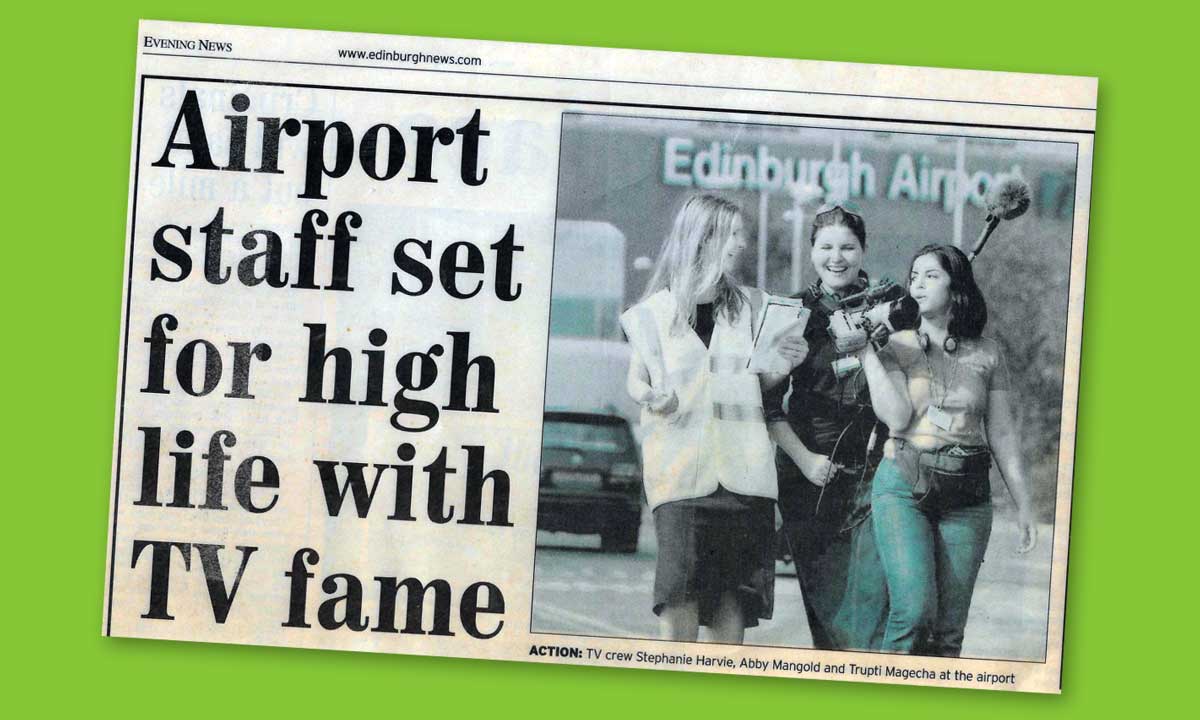
Evening post - Airport staff set for high life with TV fame featuring Abby Mangold

Jess and I are often asked this.

People’s interest veers between fascination and horror. I am hugely proud of these roots and the lessons I earned, such as…

• People love being asked about themselves. Thoughtfully chosen, well-timed questions allow people to share something about themselves, cracking open a door to their world.
And with the privilege of being invited in…

• it pays to listen closely. The tone of voice, the pace at which they speak. These are as important to what someone is saying as the words they use.

• And with that always ask the obvious – who, what, when, where, why, how – sometimes twice to be sure you have truly understood.

Every journalism job added to the skills I use in crisis communications and media training now.

And I was pretty chuffed to make it into the papers myself once while filming for a BBC Airport special from Edinburgh Festival!

Talking crisis communications & reputation management

Netherlands

It is good to be back!

For the 2nd year running, we’ve been here in the Netherlands talking crisis communications resilience on a global scale.

Having recruited us as their retained 24/7 crisis communications support, this client doubled down on their commitment with annual training for the whole team.

Crisis communications and reputation management is not just a comms job and if you haven’t had a crisis recently it’s easy to forget the important stuff.

Regularly involving other colleagues creates business-wide awareness so that:
• more people are alert to potential issues
• feel comfortable raising concerns if a crisis happens
• they are equipped and confident to support the response

Abby & Jess Mangold in the Netherlands

Main photo Joshua Kettle on Unsplash

Crisis don’t come out of nowhere

Slow Burn

Most of the crisis we manage are “slow burn”.

– They’re the issue ignored
– The complaint overlooked
– The employee concerns dismissed

So what should you be doing when you hear about an issue?

1. Do the groundwork, gather intel, fact check, craft key messages
2. Get into the detail, define the comms strategy
3. Anticipate it going live, plan for the ‘day in court’, prep those involved

Remember “slow burn” = prep time. Use it wisely.

Photo by Sebastian Pociecha on Unsplash

A critical friend

Critical Friend

A critical friend.

It’s the kind of friend, colleague and advisor I like to be.

It’s a balancing act advising CEOs when their business is under attack. Don’t say enough and you’re not worth the investment, push too hard and you can be seen as well….pushy.

So for me and Mangold Consultancy being a critical friend means being:
● straightforward by giving clear advice
● open and honest, even if it’s hard to hear
● invested in clients and their challenges, until issues are resolved

And when you look at it like that, it mirrors the relationships I have with friends too.

With special thanks to Ayesha Murray for being one of my very special and crucial critical friends.

What the **** is crisis communications and does your business need it?

Storm

A crisis can strike any business at any time.

Whether it’s a PR mishap, a data breach, or an operational failure, how you
handle the situation can make or break your reputation and have a dramatic
financial impact.

That’s where crisis communications come into play.

It involves preparing for and responding to unexpected events that could harm your organisation’s reputation. It’s about delivering clear, consistent and timely messages to everyone you need to talk to from employees to customers to the public.

But do you really need it?
● Is your business really likely to face a crisis?
● Will it even get media/social attention?

I say, yes. Every business needs to prepare for a crisis.

Here’s how it will help:
● Protect your reputation: a well-managed crisis can defend and even enhance your brand’s reputation.
● Maintain trust: keeping people informed shows transparency and builds trust.
● Minimise impact: quick, strategic responses can mitigate the negative effects of a crisis.
● Ensure continuity: effective communication helps maintain business operations and morale during turbulent times.

In uncertain times, having a solid crisis communications plan isn’t just an option – it’s a necessity.

Is your business prepared to handle the unexpected?

What do we really offer?

Mangold Consultancy Crisis Simulation Meeting

What do we actually offer?

That’s a big question that we explore often: what makes us and the business, Mangold Consultancy, different to any other crisis comms and media training consultancy?

We have many USPs but the two main ones are that we’re journalist-led and insight-driven.

Let me explain.

Journalist-led:

– With over 25 years of experience in journalism (BBC, national newspapers and regional media), social media, politics and communications, we provide unique insights into how the media works.

– We can identify and anticipate solutions to potential issues before they arise and bring a cynical journalist’s perspective to our work, always questioning communications to ensure credibility.

Insight-driven:

– Over the last decade, we’ve honed our approach based on client needs and the ever-evolving social and media landscape.

– Senior leaders find peace of mind knowing that we have faced challenging situations as both journalists and communications specialists.

– Our experience and resilience allow us to ask the tough questions necessary for complete crisis preparedness and management.

Why does this matter?
It’s a fact that no organisation is too big to get it wrong. Many of the largest ones miss the most obvious issues. Near misses and tragedies often stem from a weak culture or lack of prep.

That is why we put our all into preparation, covering every scenario to ensure our clients feel fully equipped and ready for any situation.

At Mangold Consultancy, we’re passionate about helping organisations communicate effectively and manage their reputations. Our insight-driven, journalist-led approach ensures our clients are always prepared, credible and resilient.

Mangold is 10 years old

Mangold Consultancy celebrates its 10th anniversary in 2024.

I can hardly believe Mangold Consultancy is turning 10!

– It’s gone so quickly, yet it feels like “Mangold” has been a part of my life forever because so much has been achieved.

– Over the past decade, we’ve had the privilege of working with some truly incredible brands, helping them transform how they communicate and manage their reputations. From navigating challenging media landscapes to global crisis simulations, our journey has been extraordinary.

– To celebrate this milestone, we’ve put together a video that sums up the last 10 years – our achievements, challenges and the wonderful clients we’ve partnered with. I’d love you to watch and share your thoughts.

Here’s to many more years of Mangold Consultancy.

And thank you to everyone who has been a part of our story so far.

Space Shuttle Learnings

Space Shuttle - The failure to imagine the consequences of failure are catastrophic

Tell your boss to watch this Space Shuttle documentary…

📢 Are you the lone voice nudging senior colleagues about crisis planning?

🤔 Are there known issues too trifling to confront amongst all the “business as usual”?

Watch ‘The Space Shuttle that Fell To Earth’ on BBC iPlayer and tell your bosses to do the same, if you want to get crisis communications at the top of the agenda.

👍 Congratulations to Mindhouse Productions, this brilliant 3-parter, sensitively told a difficult story, which among many things shows why a culture of open communication matters. And is as important as crisis preparation.

🚀 Even if you are not in the business of space flight, speaking out, seeking answers and encouraging conversations, will help avoid issues becoming devastating crises.

And give me a shout if your crisis comms nudge could do with a shoulder.