

How to build an effective crisis response team

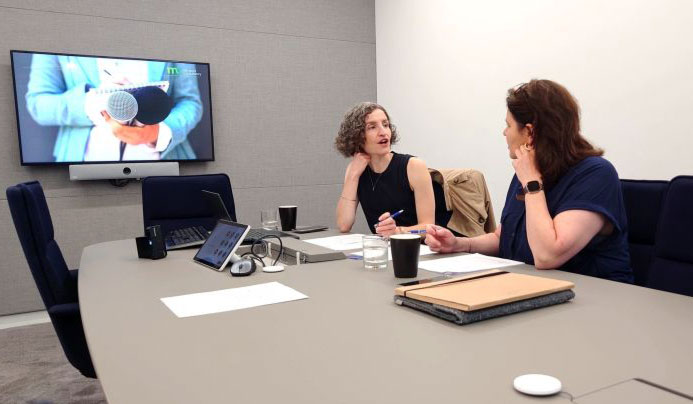
Abby Mangold and Jess Mangold in meeting

I’ve learned this the hard way: when a crisis hits, you find out very quickly who you can rely on.

Not by title.

Not by seniority.

But, by how people behave when the pressure becomes personal, before the answers become clear.

I’ve sat in rooms where decision making slowed because too many people needed to agree. I’ve seen strong legal advice help, and I’ve seen fear of getting it wrong quietly take control. I’ve watched credibility wobble when certainty was performed instead of earned.

Over time, you start to notice patterns.

Below, I’ve set out the working list I use when building or stress testing a crisis response team. It’s not theoretical. It’s shaped by what holds when timelines are tight, scrutiny is public and the margin for error feels small.

  • Calm matters.
  • Being able to say “we don’t know yet” matters.
  • Understanding how journalists think matters.
  • And so does having people in the room who are willing to challenge senior leaders when it counts. Titles don’t manage crises – People do.

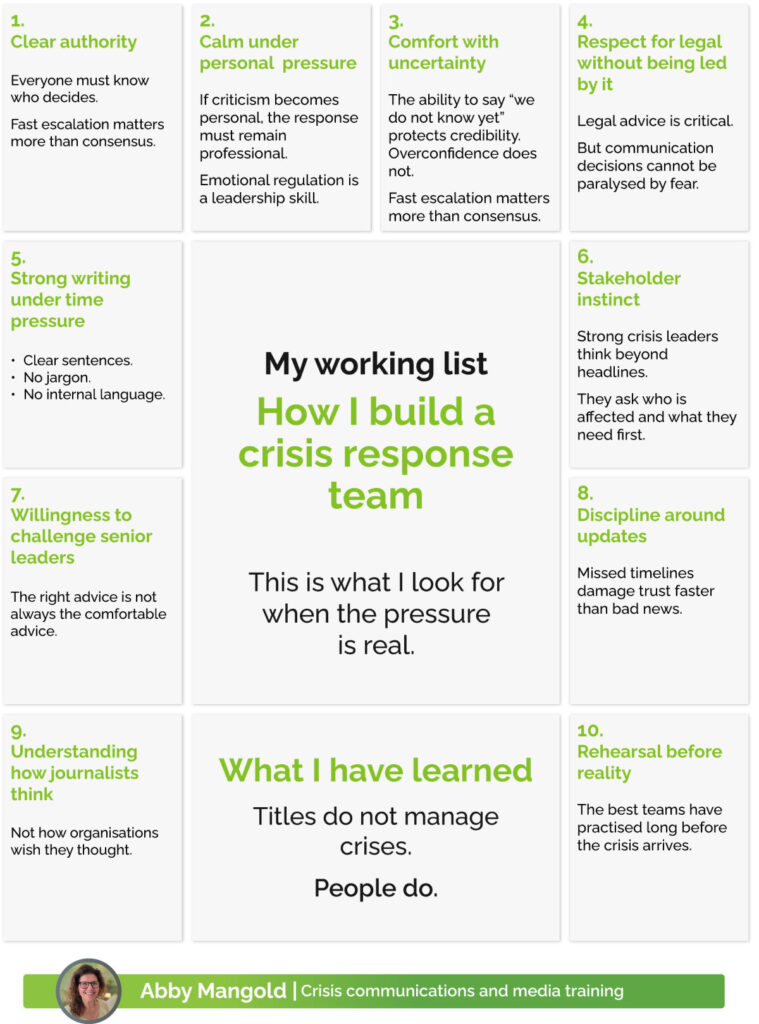
My working list: How I build a crisis response team

This is what I look for when the pressure is real.

1. Clear authority

Everyone must know who decides.
Fast escalation matters more than consensus.

2. Calm under personal pressure

If criticism becomes personal, the response must remain professional.
Emotional regulation is a leadership skill.

3. Comfort with uncertainty

The ability to say “we do not know yet” protects credibility.
Overconfidence does not.
Fast escalation matters more than consensus.

4. Respect for legal, without being led by it

Legal advice is critical. But communication decisions cannot be paralysed by fear.

5. Strong writing under time pressure

  • Clear sentences.
  • No jargon.
  • No internal language.

6. Stakeholder instinct

Strong crisis leaders think beyond headlines.

They ask who is affected and what they need first.

7. Willingness to challenge senior leaders.

The right advice is not always the comfortable advice.

8. Discipline around updates

Missed timelines damage trust faster than bad news.

9. Understanding how journalists think

Not how organisations wish they thought.

10. Rehearsal before reality

The best teams have practised long before the crisis arrives.


To learn more about stress-testing your internal response structures, visit our Crisis Planning and Preparation page.

How I build a crisis response team

5 things a crisis communication spokesperson does

5 Things a Crisis Communication Spokesperson Does. Photo by Fardad sepandar on Unsplash

Being the face of the organisation in a crisis is a BIG ask.

So a spokesperson must ask a few things in return before doing an interview.

Here are 5 things great spokespeople do in a crisis:

  1. Complete clarity on what they can say publicly at this stage.
  2. Answers on information gaps. Even if the details are not available.
  3. Space to rehearse key messages, and their way of saying them.
  4. Confidence to make the most of the interview, conveying empathy and personal commitment.
  5. A reliable deputy for their usual role so they can focus on the media.

Comment here if you have any more tips…

Featured Image by Fardad sepandar on Unsplash

Media & Presentation Training 2.0

Media and Presentation Training with Mangold Consultancy

As TV news anchors around the world set up studios in their homes with teleprompters, specialist lighting, makeup and HD broadcast cameras; interviewees must also up their game. “News” needs experts, spokespeople and human stories more than ever and the best people you will see and hear, the ones who get invited back, have received media & presentation training – even if they are speaking from a laptop in their living room. Continue reading “Media & Presentation Training 2.0”