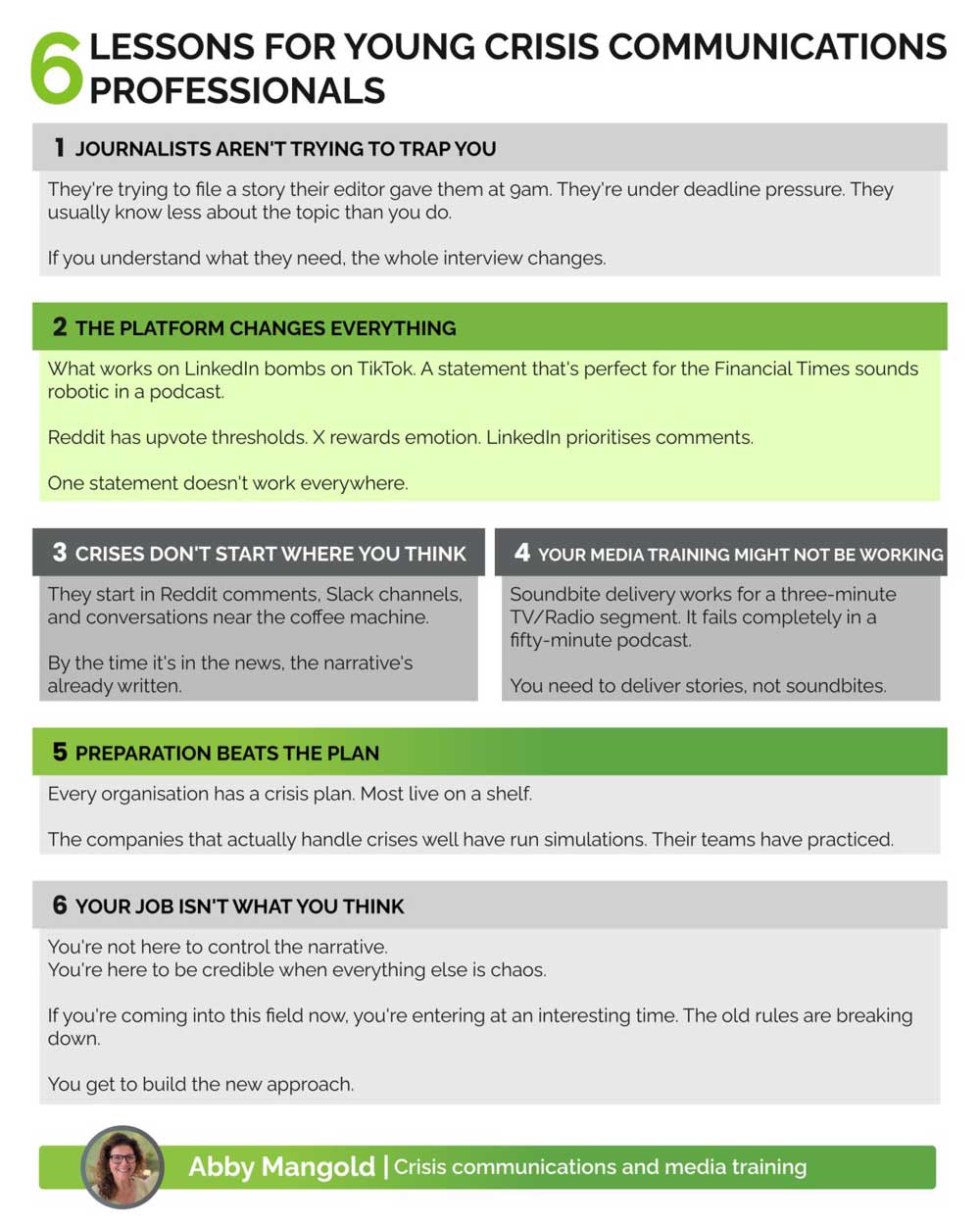
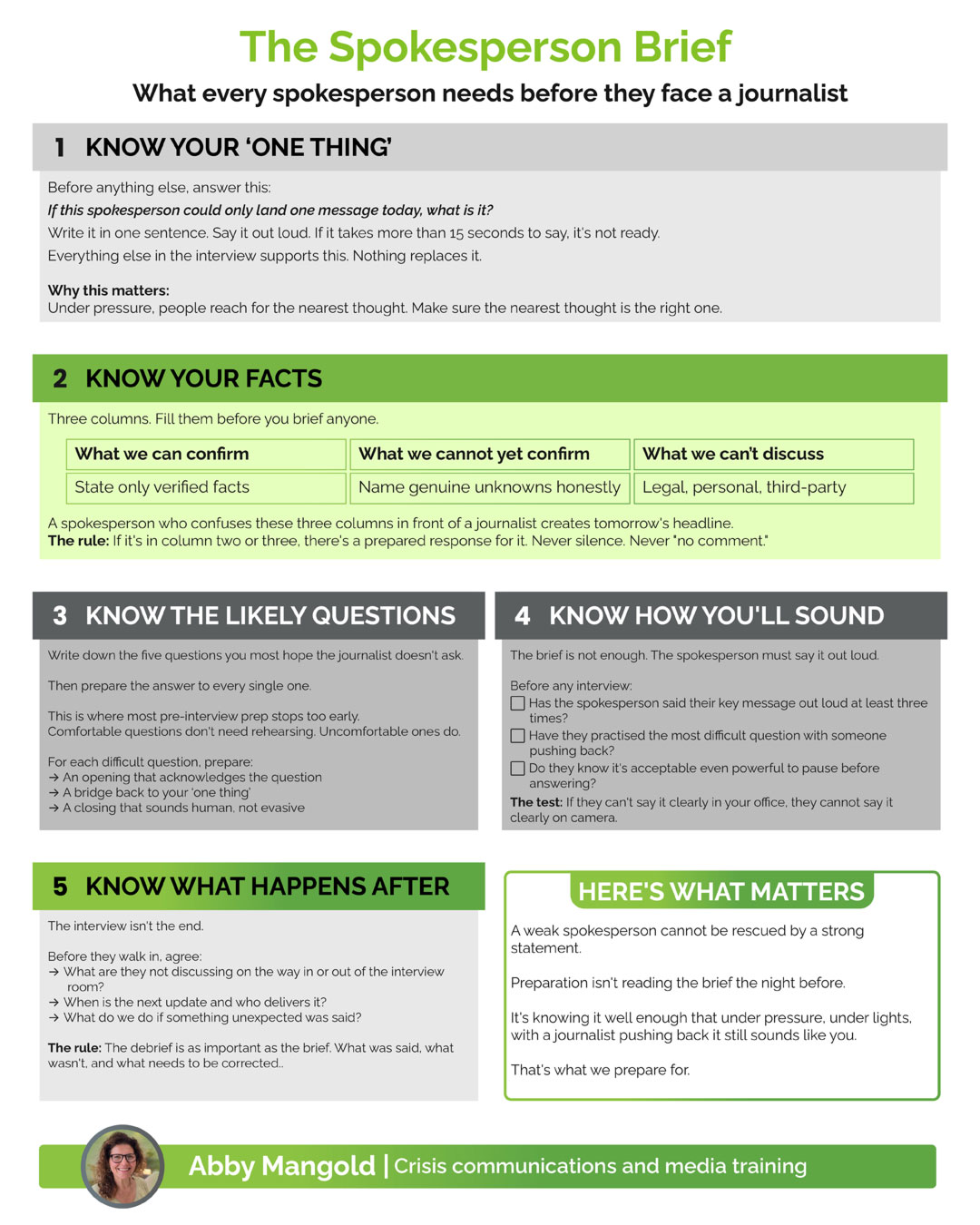
What works in live TV interviews is probably not going to work in podcasts. Here’s what to do instead, and why podcast training needs to look different.
I’ve been watching this pattern for the past few years. Someone gets invited onto a podcast. They prepare the same way they would for a broadcast interview. Tight messages. Clear soundbites. Three key points to hit.
Then they sit down for ninety minutes with a host who wants to explore, not extract.
And it falls apart.
On TV, you have a few seconds. Maybe a minute or two if it’s a longer segment. The journalist asks a question, you give a disciplined answer, you pivot to your message. If you don’t want to answer something, you acknowledge and redirect.
The whole thing moves fast. You can deflect and the interview is over before anyone notices.
Podcasts don’t work like that.
You’re in a conversation, they want to hear you. The host isn’t rushing to the next segment. If you give a clipped answer, they’ll ask again. If you deflect, they’ll circle back twenty minutes later. If you keep pivoting to your message, you’ll sound like a politician and the audience will notice.
I’ve seen people show up with media training and try to stay “on message” for sixty minutes. It sounds robotic. The host gets frustrated. The conversation never finds a rhythm.
Or they do the opposite. They relax too much. They think it’s just a chat. And they say things they’d never say on camera.
Both are mistakes.
TV interviews are about control. You control your message, your time, your exposure. The format allows for that.
Podcasts are about depth. The audience is choosing to spend an hour with you. They’re not looking for soundbites. They’re looking for substance. For stories. For the parts of your thinking that don’t fit into a three-minute segment.
That requires different preparation.
You still need to know what you won’t talk about. You still need to be clear on your position. But you also need to be comfortable exploring ideas, telling longer stories, following the conversation where it goes.
Most people don’t prepare for that. They show up thinking it’s just a relaxed version of a TV interview.
It’s not.
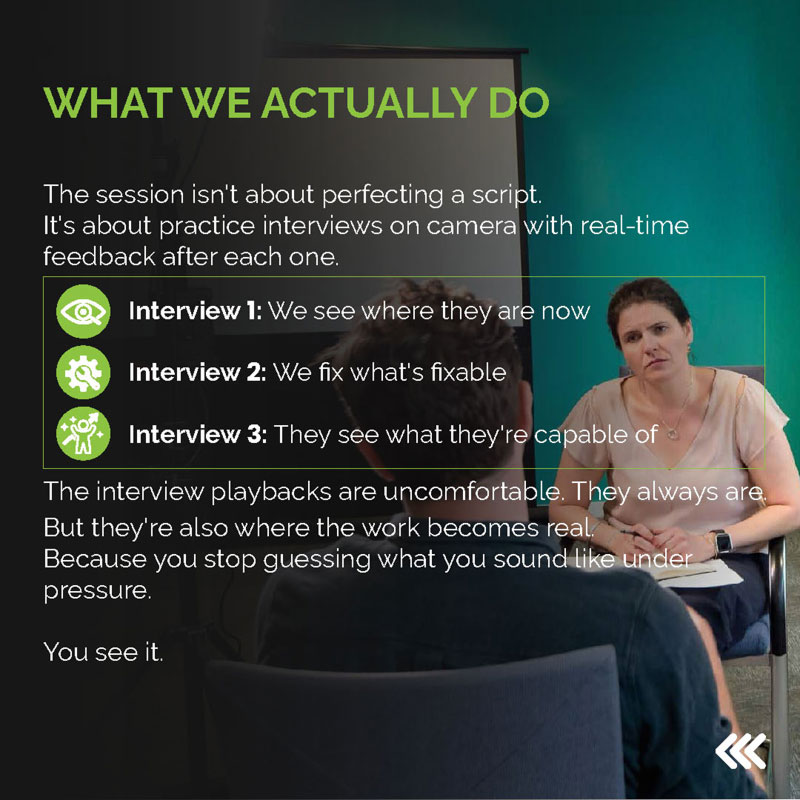
We train people differently for podcasts. Less about message discipline, more about narrative discipline. Less about deflecting questions, more about knowing when to stop talking. Less about soundbites, more about building an argument over time.
The executives who do podcasts well, understand this. They’re not trying to control the conversation. They’re trying to have a real one whilst staying within boundaries they’ve set for themselves.
That’s harder than it sounds. Because for ninety minutes, you can’t hide behind a polished message. You have to actually think on your feet. You have to be interesting. You have to sound like a human, not a press release.
Podcast training is different.
And if you don’t adjust, the podcast will expose it.
If you’ve got a podcast appearance coming up and you’re preparing the way you would for TV, it’s worth a rethink. Get in touch to find out how our media training covers long-form formats, not just soundbites.
Join the discussion on LinkedIn »